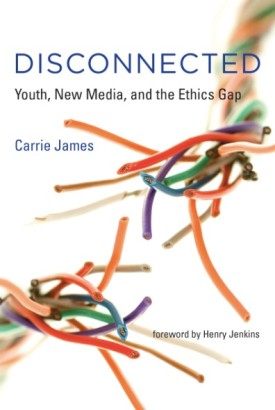
I don't know about the millions of people in developing countries going online for the first time with mobile phones but, here in the developed world, something strange happened when we moved onto the Web nearly 20 years ago. It's as if we checked our thousands of years of social-norms and ethics development at the door of cyberspace. Somehow we saw that space as "technology" and got stuck there – … [Read more...] about ‘Disconnected’: Crucial book for closing the ‘ethics gap’ online
Berkman Center
Two 2014 anniversaries that say reams about our kids’ futures

We don't want to let 2014 slip away without marking two anniversaries that are very important to our children: those of an invention and a convention. This year was the 25th anniversary of Tim Berners-Lee's release of his computer code creating the World Wide Web, now with some 3 billion users worldwide, and the 25th anniversary of the UN's adoption of the Convention on the Rights of the Child … [Read more...] about Two 2014 anniversaries that say reams about our kids’ futures
Top takeaways from US’s top Net-safety conference
Each November Internet-safety organizations, tech and media companies, researchers, authors and policymakers gather in Washington, D.C., to get an update on young people's social media practices, safety and privacy at "FOSI," the nickname for the Family Online Safety Institute's annual conference. That update just happened, and here are my top takeaways. Internet safety not really about the … [Read more...] about Top takeaways from US’s top Net-safety conference
The anonymity factor
A sidebar to the first and second parts to what has turned out to be a series on digital bullying & self-harm: Although anonymity has long been a source of safety, especially in political and human rights situations, it has been cited largely as a source of danger where teens and social media are concerned. Ask.fm, a social media that allows anonymous posting, figured prominently in early … [Read more...] about The anonymity factor
Major update from Pew on teens’ privacy practices in social media
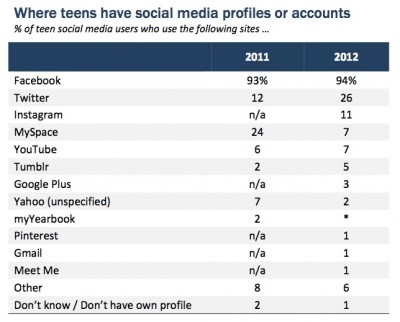
Contrary to how they're typically represented in the news media, "few teens embrace a fully public approach to social media," Pew Internet reports in a major new study, "Teens, Social Media and Privacy." Yes, they share more about themselves than we did as teens (publicly, anyway), but "they take an array of steps to restrict and prune their profiles." Pew turned up a lot of intelligence on … [Read more...] about Major update from Pew on teens’ privacy practices in social media